Insuring the Load: Motor Truck Cargo for Truss Delivery
Hauling 60-foot trusses down the highway is one of the most exposed things your plant does — and the cargo is often worth more than the truck. Here's how to close the transit gap.
By Contractors Choice Agency
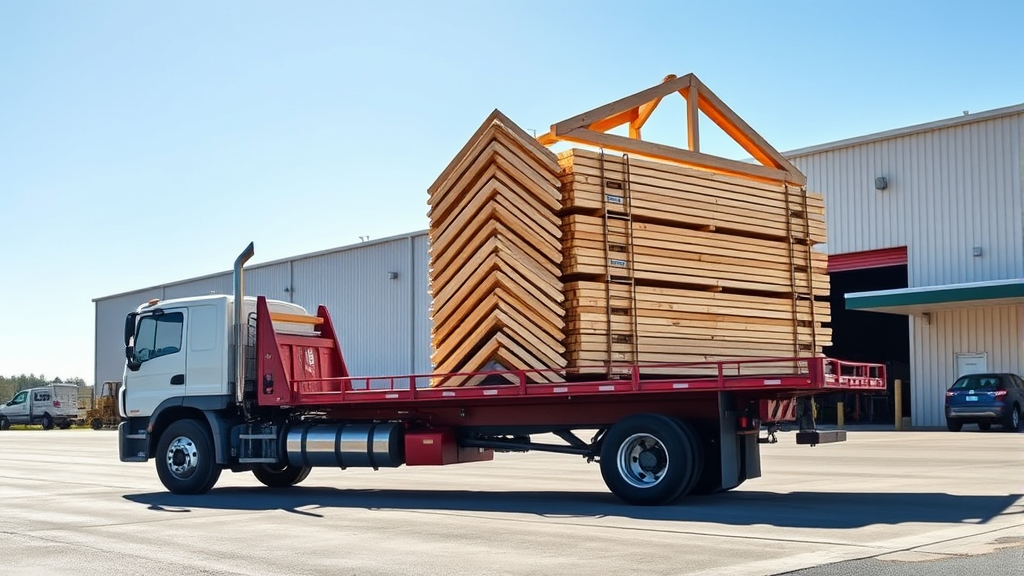
The drive from your yard to the jobsite is the most public thing your business does. A flatbed stacked with roof trusses is tall, wide, and unmistakable — and when something goes wrong on the road, it goes wrong in traffic, in front of witnesses, often with an oversized load that magnifies the damage.
For plants that deliver their own trusses, commercial auto is one of the most important — and most commonly misunderstood — parts of the insurance program.
Three different exposures, three different coverages
Most plant owners think of "trucking insurance" as one thing. It's actually three distinct coverages that protect three different interests, and missing any one of them leaves a gap:
- Auto liability covers the damage your truck does to other people and property in an accident.
- Physical damage (collision and comprehensive) covers the repair or replacement of your tractor, flatbed, or boom truck itself.
- Motor truck cargo covers the trusses on the trailer — the product you're hauling.
The one that gets missed most often is the last one. And for a truss plant, the cargo is usually worth more than the truck.
What happens to the trusses in a wreck
Picture a loaded flatbed that has to brake hard, take a corner too tight, or gets hit. The trusses shift, the stack topples, the banding breaks, and the load comes apart on the highway. Even if nobody is hurt, the product is destroyed — and you're looking at a full trailer of finished roof trusses, damaged beyond use, sitting on the shoulder.
Without motor truck cargo coverage, that loss is yours. Your auto liability doesn't cover your own cargo, and your physical damage covers the truck, not what's on it. The trusses — your material, your labor, your margin — are uninsured unless you specifically insured them as cargo.
Oversized loads raise the stakes
Trusses make the cargo question harder because they're almost always oversized. A 60-foot roof truss overhangs the trailer, requires permits, flags, and sometimes escorts, and presents a larger target for things like low-hanging wires, bridge clearances, and wind. Oversized loads have a higher frequency of both damage claims (load shift, impact) and liability claims (striking an object or another vehicle).
Coverage needs to be structured for that reality — not written as generic business-use auto that quietly assumes standard freight.
If you run boom trucks, there's more
Many truss plants don't just deliver — they set. A boom truck that lifts and places trusses on a jobsite is doing crane work, and crane operations are a distinct exposure that standard auto coverage frequently misses. The lift itself, a truss dropped during the set, or a swing-into collision with the structure all need to be addressed, sometimes through an inland marine or crane endorsement rather than the auto policy.
If you deliver and set your own trusses, this is one of the first gaps we look for.
How to control the cost
Commercial auto premium is driven mostly by three things you can influence:
- Driver MVRs and CSA scores — clean records and a structured hiring process keep you in the best-rated tiers.
- DOT compliance — driver qualification files, hours-of-service logs, and maintenance records both reduce risk and demonstrate it to underwriters.
- Deductible strategy — carrying a higher deductible on physical damage, where it makes sense, can meaningfully reduce premium.
We shop carriers based on your actual fleet and driver profile instead of letting one blemish price you out of the market, and we help you run the compliance practices that keep costs down over time.
Close the gap before the next run
Every delivery you make is a roll of the dice on coverage you may not actually have. If you're not certain your motor truck cargo and boom-truck exposure are addressed, that's a fast, high-value thing to fix — usually without changing the rest of your program.
Keep reading
Does Your General Liability Actually Cover the Trusses You Build?
Most truss manufacturers assume their GL policy covers the product they make. For a fabrication operation, that assumption can be a company-ending mistake. Here's how to find out.
ReadEquipment Breakdown: Why a Failed Press Can Cost More Than the Repair
When a hydraulic truss press or saw line fails, the repair is the small number. The lost production behind it is what hurts. Equipment breakdown coverage is how you protect both.
Read