Equipment Breakdown: Why a Failed Press Can Cost More Than the Repair
When a hydraulic truss press or saw line fails, the repair is the small number. The lost production behind it is what hurts. Equipment breakdown coverage is how you protect both.
By Contractors Choice Agency
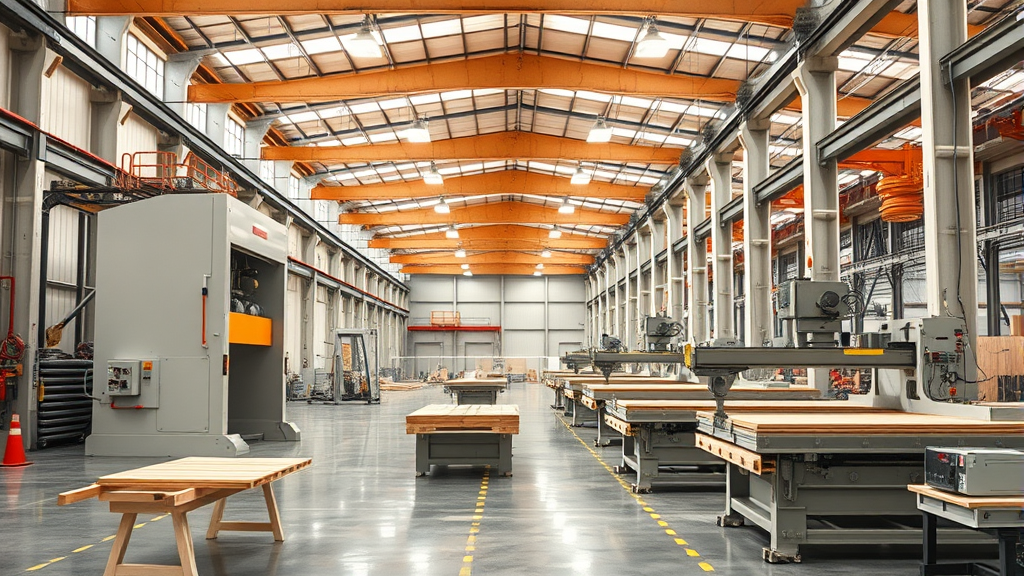
A hydraulic truss press is the most important machine on your floor. It's also one of the most expensive to repair and one of the hardest to replace quickly. When a press cylinder cracks, a control panel arcs out, or a gantry saw motor seizes, the immediate question is never just "what will this cost to fix?" It's "how many days until we're shipping trusses again?"
That second question is where most truss plants are under-insured.
Standard property doesn't cover breakdown
There's a common and expensive misconception that commercial property insurance covers equipment failure. It generally does not. Property insurance covers external causes of loss — fire, wind, hail, theft. It does not cover the sudden mechanical or electrical failure of your machinery.
A cracked press cylinder, a shorted control board, a motor that burns out, arcing in an electrical panel — these are exactly the failures that property insurance excludes. They're covered instead by equipment breakdown coverage (the modern version of what used to be called boiler and machinery).
If your program doesn't have equipment breakdown written as a real coverage, and not a vague endorsement, the cost of these failures comes straight off your bottom line.
The repair is the small number
Say a press fails on a Tuesday. The part has a six-week lead time. For those six weeks, you're either down entirely or running at reduced capacity. Consider what that actually costs:
- Lost revenue on the trusses you can't build and ship.
- Expedited parts and freight to shorten the downtime.
- Rental or leased equipment to keep part of the line moving.
- Overtime to catch up once the press is back.
For a plant shipping a meaningful volume, six weeks of reduced production easily runs into six figures — far more than the cost of the part itself. Equipment breakdown coverage that includes business income and extra expense is what reimburses you for that gap.
What good equipment breakdown coverage includes
A properly structured equipment breakdown policy for a truss plant should cover:
- The equipment itself — presses, gantry saws, roller conveyors, air compressors, motors, and the electrical panels and controls that run them.
- Expediting expenses — the premium freight and rush charges to get parts faster.
- Business income — the profit you lose during the downtime.
- Extra expense — the cost of renting equipment, running overtime, or taking any reasonable measure to shorten the interruption.
The coverage should be valued at what it actually costs to get back to full production, not an arbitrary sublimit buried in the policy.
How we set the limits
Coming from the trades, we understand what a press, a gantry saw, and a kiln actually cost — and how long they take to replace. We value each major piece of equipment at realistic replacement cost, including shipping, installation, and lead time. Then we set business-income coverage based on a realistic downtime scenario, not a best case.
That matters because the worst time to discover your equipment-breakdown coverage is under-sized is the week your press is down and you're waiting on a part.
Don't wait for the failure to find the gap
If you run an automated line, you will eventually have a breakdown. The only question is whether the policy behind you was built for the lost production — or just the part. We can usually tell you the answer in a quick review of your current property schedule.
It's one of the highest-value changes a truss plant can make to its insurance program, and it rarely costs what owners expect.
Keep reading
Does Your General Liability Actually Cover the Trusses You Build?
Most truss manufacturers assume their GL policy covers the product they make. For a fabrication operation, that assumption can be a company-ending mistake. Here's how to find out.
ReadInsuring the Load: Motor Truck Cargo for Truss Delivery
Hauling 60-foot trusses down the highway is one of the most exposed things your plant does — and the cargo is often worth more than the truck. Here's how to close the transit gap.
Read