Does Your General Liability Actually Cover the Trusses You Build?
Most truss manufacturers assume their GL policy covers the product they make. For a fabrication operation, that assumption can be a company-ending mistake. Here's how to find out.
By Contractors Choice Agency
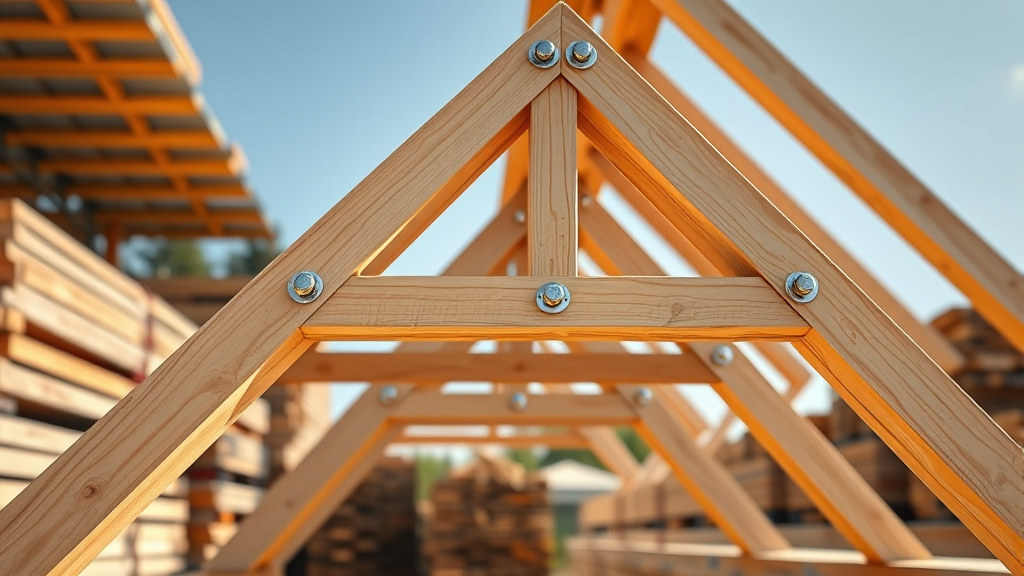
Ask a truss plant owner what keeps them up at night and you'll usually hear about the press, the labor market, or lumber prices. Rarely do you hear about the product itself — the roof truss or floor truss they fabricated, shipped, and forgot about two jobs ago.
That's the exposure that should keep them up. And the policy they assume covers it often doesn't.
The quiet difference between a contractor and a manufacturer
General liability insurance was designed around a contractor's hazard: the risk of causing bodily injury or property damage while working on someone else's property. Drop a tool, scratch a floor, knock over a wall — that's what GL pays for.
A truss manufacturer has a different hazard entirely. You make a structural product that gets installed and then stands — sometimes for decades. If that product fails, the damage happens long after your work is "done," and the claim that follows is governed by a specific part of the policy called products and completed operations.
Here's the problem: the products hazard is frequently the weakest section of a standard contractor GL policy. It's capped, carved back by endorsements, or excluded outright. A generalist agent who mostly writes contractors can hand you a policy that looks complete and silently leaves your single biggest exposure under-covered.
How a truss failure actually unfolds
When a roof truss fails on a jobsite or in an occupied home, the plaintiff's attorney does not spend much time figuring out who to name. They name everyone in the chain: the framer who installed it, the general contractor who bought it, and — critically — the plant that fabricated and possibly designed it.
You will be named whether or not the truss was actually defective. Proving the failure was an installation error and not a manufacturing defect requires engineers, metallurgical review of the connector plates, design analysis, and counsel. That defense alone can run into six figures before anyone agrees on what happened.
What to look for on your declaration page
Pull your current GL policy and look for a few specific things:
- Products and completed operations coverage — is it included, and at what limit? It should match your general aggregate, not be capped lower.
- Exclusions and endorsements — look for "products-completed operations hazard" exclusions, or manufacturing endorsements that carve it back.
- Defense costs — are they paid inside the limit (which eats your coverage) or outside (which preserves it)? For a manufacturer, outside-the-limit defense is worth paying for.
- The named insured — is your manufacturing entity properly listed, or is coverage tied to a holding company or a contractor classification?
If any of those are off, the policy you have is not the policy you think you have.
How a specialist structures it differently
A truss-manufacturer program built by an agency that understands component manufacturing does three things differently:
1. It writes products liability as a primary structure for a fabrication operation, not as a contractor endorsement.
2. It sizes the limit to the real exposure — your volume, the structures your trusses go into, and whether you design or just fabricate.
3. It layers an umbrella above it so a catastrophic multi-claim event doesn't exhaust the primary and keep going into your assets.
The bottom line
You don't get to choose whether a truss you built ten years ago gets named in a lawsuit. You do get to choose whether the policy behind you was built for that moment, or for a contractor who never made anything.
If you're not sure what your current GL actually covers when it comes to the product you make, that's the first thing we review. In most cases it takes a single phone call to find out — and a single phone call to fix.
Keep reading
Equipment Breakdown: Why a Failed Press Can Cost More Than the Repair
When a hydraulic truss press or saw line fails, the repair is the small number. The lost production behind it is what hurts. Equipment breakdown coverage is how you protect both.
ReadInsuring the Load: Motor Truck Cargo for Truss Delivery
Hauling 60-foot trusses down the highway is one of the most exposed things your plant does — and the cargo is often worth more than the truck. Here's how to close the transit gap.
Read