Controlling Your Workers' Comp Experience Modifier on the Truss Floor
Your experience modifier drives your workers' comp premium for years. A single bad claim year can quietly raise what you pay long after it's resolved. Here's how truss plants keep it low.
By Contractors Choice Agency
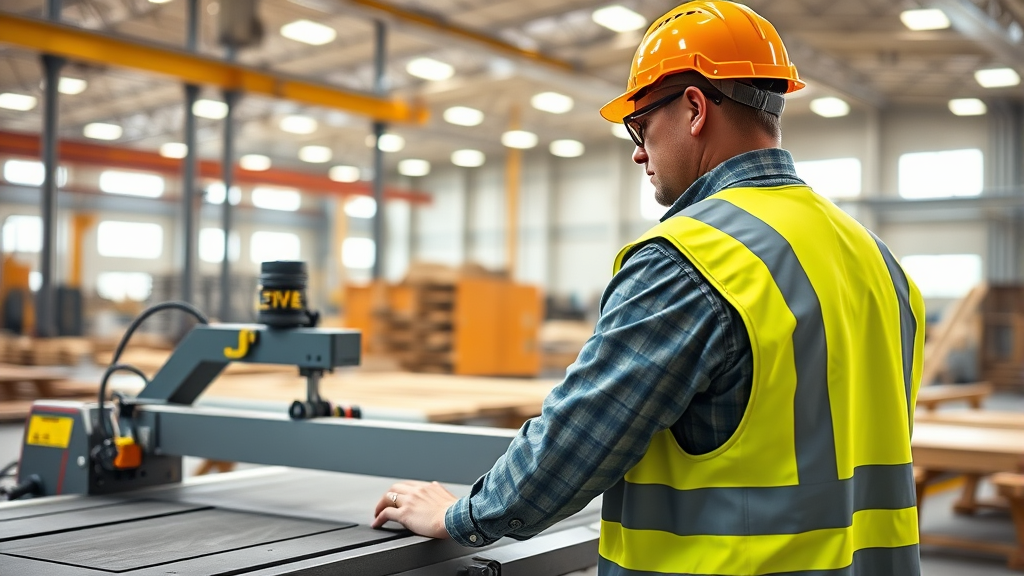
A truss plant is a manufacturing floor with a construction-grade injury profile. Saw operators run blade-equipped machinery all day, press operators work around hydraulic crushing forces, yard crews handle heavy lumber and finished trusses, and loaders and drivers handle the logistics. Each of those jobs carries a real, specific injury exposure.
Workers' compensation covers those injuries when they happen. But how much you pay for that coverage is governed by a single number most plant owners don't fully understand: the experience modifier.
What the experience modifier actually is
Your experience modifier — often called the x-mod or E-mod — is a multiplier applied to your workers' comp premium. It compares your actual claims history to what's expected for a business of your type and size.
- A mod of 1.00 means your claims are average for your class.
- A mod below 1.00 means you're safer than average — and you get a credit on your premium.
- A mod above 1.00 means you're riskier than average — and you pay a surcharge.
That multiplier doesn't just affect one year. A claim that hits your experience period follows you for three years, raising your premium long after the injured employee is back at work. A serious press or saw injury can push a mod high enough to materially change what you pay across the whole period.
The two levers that move it
The good news is that the x-mod is largely within your control. It moves on two levers:
1. Frequency. The rating bureaus weight claim frequency heavily, because lots of small claims signal a systemic safety problem. Five small claims often hurt your mod more than one large one. Reducing the number of injuries — even minor ones — is the single biggest lever.
2. Severity, managed by controlling claim cost. When an injury does happen, how much the claim costs matters. The fastest way to control cost is a strong return-to-Work program: bring the injured employee back on light duty as soon as they're medically cleared, even at reduced capacity. An employee back at work earning most of their wage has a short, low-cost claim. An employee sitting at home on full indemnity has a long, expensive one.
What actually works on a truss floor
The plants that keep their mods low aren't doing anything exotic. They're doing the basics consistently:
- Real machine guarding and lockout/tagout on presses and saws, enforced — not just documented for an audit.
- Mandatory PPE that's actually worn, with hi-vis, eye, and hearing protection as a condition of being on the floor.
- A documented return-to-work plan with defined light-duty roles, so an injured operator has a place to come back to immediately.
- Near-miss reporting so the safety problem gets fixed before it becomes a claim.
- A carrier and agent who help with loss-control services, safety resources, and claim advocacy.
The number you can't see
Here's the part that surprises plant owners: your x-mod is calculated from data reported by your carrier to the rating bureau, and it can be wrong. Misreported payroll, a claim coded to the wrong class, or an open claim that should have been closed can all inflate your mod — and your premium along with it.
Part of managing workers' comp is reviewing the unit statistical reports behind your mod, contesting errors, and making sure closed claims are actually closed. Most plants never look at this data. The ones that do often find money.
The compounding effect
Because the mod affects three years of premium, the work you do on safety and return-to-work this year pays you back for years. A plant that drops its mod from 1.15 to 0.90 doesn't just save this year — it saves across the whole experience period.
That's why workers' comp, more than almost any other coverage, rewards an owner who treats it as a program rather than a bill. We help truss plants run that program — the classification, the return-to-work plan, the mod review, and the carrier placement — so the number keeps moving the right direction.
Keep reading
Does Your General Liability Actually Cover the Trusses You Build?
Most truss manufacturers assume their GL policy covers the product they make. For a fabrication operation, that assumption can be a company-ending mistake. Here's how to find out.
ReadEquipment Breakdown: Why a Failed Press Can Cost More Than the Repair
When a hydraulic truss press or saw line fails, the repair is the small number. The lost production behind it is what hurts. Equipment breakdown coverage is how you protect both.
Read